Contact Us

Pharmaceutical stability testing is a critical process in drug development used to evaluate how a product maintains its quality, safety, and efficacy over time under strict environmental conditions.
While primarily associated with the pharmaceutical industry, stability testing is also widely used across the broader life sciences sector, including biotechnology and clinical research applications. Pharmaceutical manufacturing, however, represents the most regulated and commercially significant application area for stability testing.
These studies ensure that medicines remain effective throughout their intended shelf life and comply with global regulatory expectations.
Why pharmaceutical stability testing is important
Pharmaceutical stability testing plays a fundamental role in ensuring patient safety and product reliability.
It enables manufacturers to:
- Establish accurate shelf life for drug life
- Define appropriate storage conditions
- Support regulatory labelling requirements
- Ensure consistent product performance over time
Every storage instruction on a pharmaceutical product is derived from stability data generated under controlled conditions. These conditions are designed to replicate real-world environments as closely as possible while maintaining scientific consistency.
In broader life science applications, similar principles are applied to biologics, research compounds, and advanced therapeutic products, although regulatory frameworks may differ in stringency.
How pharmaceutical stability testing works
Pharmaceutical stability testing involves storing products under controlled environmental conditions and evaluating them at defined time points throughout their lifecycle.
Studies typically include:
- Long-term stability testing– assesses performance under recommended storage conditions
- Accelerated stability testing– uses elevated stress conditions to predict long-term behaviour
- Intermediate stability testing– used when additional confirmation data is required
At each stage, samples are analysed for key quality attributes, including:
- Potency
- Purity
- Physical appearance
- Chemical Stability
- Microbiological integrity (where applicable)
This ensures the product remains within specification throughout its shelf life.
Environmental Conditions in Stability Testing
Controlled environmental conditions are central to pharmaceutical stability testing.
Temperature and humidity are the primary variables that influence product degradation, packaging performance, and overall stability outcomes.
Even small fluctuations in these conditions can:
- Affect degradation rates
- Compromise data integrity
- Leads to inaccurate shelf-life designation
- Create regulatory compliance risks
As a result, stability testing must be conducted in highly controlled and validated environments that ensure repeatability and consistency across long-term studies.
ICH climatic zones and global stability requirements
ICH climatic zones are a standardised classification system defined by the International Council for Harmonisation of Technical Requirements for Pharmaceuticals for Human Use.
They are used to align stability testing conditions with global environmental variations, ensuring pharmaceutical products are tested under conditions that reflect their intended markets.
This system includes:
- Temperature climates
- Subtropical
- Hot dry climate
- Hot humid climates
One of the most widely used long-term stability conditions is 25°C / 60% RH, commonly associated with temperate and subtropical regions.
This framework ensures consistency in product performance expectations across global pharmaceutical distribution networks and supports regulatory submissions in multiple regions.
GMP and Regulatory Expectations
Pharmaceutical stability testing is governed by Good Manufacturing Practice (GMP) requirements, including EU GMP and PIC/S guidelines.
These frameworks require manufacturers to implement ongoing stability programmes throughout the product lifecycle.
Key expectations involve:
- Continuous stability monitoring after product approval
- Testing at defined stability time points
- Controlled and validated storage conditions
- Full documentation for regulatory inspection
These requirements ensure that any changes in formulation, packaging, or manufacturing processes do not negatively impact product stability over time.
The Importance of Controlled Environments:
Stability testing depends entirely on the ability to maintain precise environmental control over extended periods.
Controlled environments are essential because:
- Temperature variation can accelerate or mask degradation
- Humidity fluctuations can affect chemical and physical stability
- Inconsistent conditions can invalidate entire datasets
This level of control is critical not only for pharmaceutical compliance but also for advanced life science applications where experimental accuracy is essential.
Environmental Systems in Pharmaceutical and Life Science Stability Testing
As stability testing requirements continue to grow in scale and complexity, manufacturers increasingly rely on dedicated environmental systems to maintain controlled conditions.
These systems support both pharmaceutical and wider life science applications by providing consistent temperature and humidity control across long-term studies.
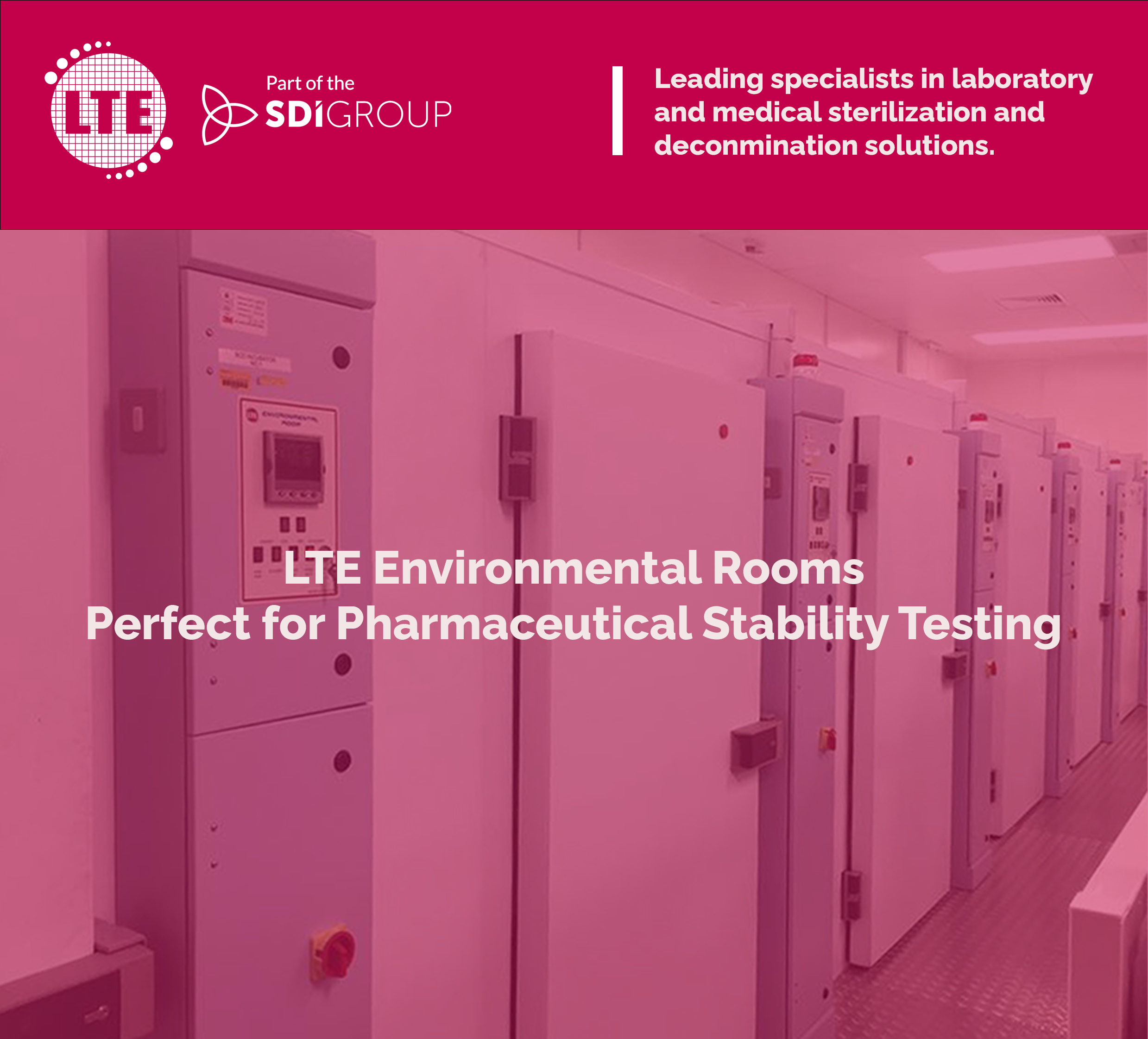
At LTE Scientific, environmental room solutions are designed specifically to support regulated pharmaceutical stability testing while also being capable of accommodating broader life science research requirements.
These systems are used for:
- Long-term and accelerated stability studies
- Multi-product and high-volume testing programmes
- Controlled research environments in life science applications
- Regulatory-compliant pharmaceutical development workflows
By ensuring consistent environmental conditions, these systems help maintain data integrity, support regulatory compliance, and enable scalable stability programmes.
Ensuring Long-Term Pharmaceutical Quality
Pharmaceutical stability testing is a fundamental requirement in drug development, ensuring that medicines remain safe, effective, and compliant throughout their lifecycle.
While its primary application is within the pharmaceutical industry, stability testing also plays an important supporting role across the wider life sciences sector, particularly in biotechnology and research environments.
By combining regulatory frameworks, controlled environmental conditions, and robust testing methods, organisations can generate reliable, reproducible stability data across global markets.
As demand for stability testing continues to grow, the importance of precise environmental control systems becomes increasingly critical in both pharmaceutical and life science applications.