Contact Us
Why Normothermia is Critical in Surgery:
Maintaining patient normothermia in surgery is essential for safe and effective surgical care. Surgical procedures place significant stress on the body’s thermoregulatory mechanisms, making temperature management a clinical priority throughout the perioperative pathway.
In humans, normothermia is defined as a core body temperature between 36.5°C and 37.5°C. Although body temperature naturally fluctuates throughout the day, sometimes by as much as 1°C due to circadian rhythms. It is important to remain within this range is critical for optimal physiological function.
Without active warming strategies, surgical patients are at considerable risk of developing unintended hypothermia.
Why Maintaining Patient Normothermia in Surgery is Challenging:
Factors which could affect a patients normothermia include:
Operating Room Environment:
Operating rooms can sometimes promote the development of hypothermia as the environmental parameters necessary to maintain the sterility in the room can conflict with the patients thermoregulatory needs. Factors which could facilitate heat loss includes:
- Low ambient temperature in the operating room
- Airflow generated by ventilation and air conditioning systems
- Low relative humidity
- Exposure to metal surfaces, surgical instruments, and equipment components
General Anaesthetic:
General anaesthesia further increases the risk of hypothermia. Under anaesthetic, patients cannot consciously respond to cold sensations. In addition:
- Anaesthesia reduces metabolic rate, lowering endogenous heat production
- It impairs the thermoregulatory centre in the hypothalamus
- It causes vasodilation, which promotes heat redistribution from the core to the periphery
These combined effects significantly increase the likelihood of perioperative hypothermia if proactive warming measures are not in place.
How hypothermia affects patient outcomes:
Hypothermia, which is a core body temperature below 35°C, can significantly worsen patient outcomes by impairing metabolic, cardiac, and coagulation functions. This can lead to increased risks of mortality, increased risk of infection, and prolonged hospital stays.
Benefits of Blanket Warming Cabinets:
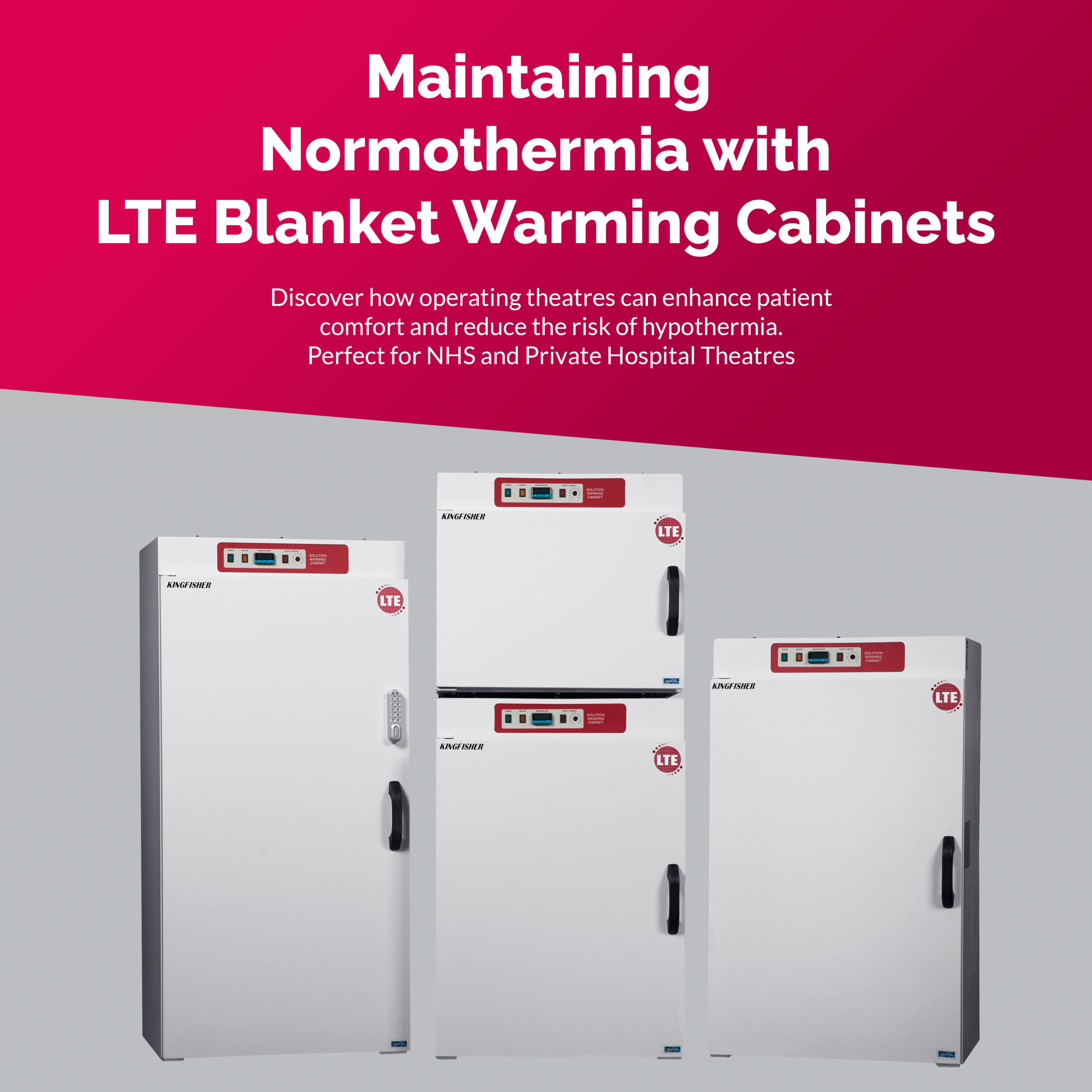
LTE Blanket Warming Cabinets help prevent perioperative hypothermia by ensuring blankets are maintained at precise, clinically appropriate temperatures. Warmed blankets are readily available for both pre- and post-operative use, supporting proactive temperature management at every stage of care.
Supporting Patient Comfort During Surgery:
During anaesthetic induction, warm blankets provide immediate reassurance and physical comfort, helping to reduce anxiety at a vulnerable time. Maintaining warmth promotes dignity and enhances the overall patient experience.
In recovery, temperature stability remains equally important. LTE cabinets are engineered to deliver consistent and even heat distribution throughout the blanket load. This ensures uniform warming and supports the maintenance of core body temperature, contributing to smoother, safer recoveries.
Adjustable temperature settings allow clinical teams to tailor warming levels according to specific surgical procedures, patient needs, and clinical protocols. This adaptability ensures compliance with best practice guidelines while delivering effective perioperative warming solutions.
By integrating blanket warming cabinets into perioperative workflows, NHS theatres can take a simple yet highly effective step toward improving clinical outcomes.
Supporting Efficient Theatres:
Blanket warming cabinets play a vital role in supporting NHS theatre efficiency by ensuring that warm blankets are readily available at all times. By maintaining a consistent supply of pre-warmed blankets, theatre teams can respond immediately to patient needs without unnecessary interruptions or delays. This is particularly important in busy operating environments, where smooth patient flow from one procedure to the next is essential to meeting schedules and maximising theatre utilisation.
Having instant access to warm blankets not only enhances patient comfort and helps maintain normothermia, but also reduces the risk of delays between cases that can occur when staff need to source or wait for warmed linen. In high-demand theatre settings, even small hold-ups can accumulate, impacting overall productivity and increasing pressure on clinical teams. Blanket warming cabinets therefore contribute to streamlined workflows, improved time management, and better use of theatre capacity. Ultimately, they support both operational efficiency and high standards of patient care across NHS surgical services.
Discover how LTE can Support your Theatre
If you’re looking to improve perioperative warming solutions, enhance NHS theatre efficiency, and protect patient outcomes, speak to our team today.
Contact us to learn more about how LTE Blanket Warming Cabinets can support your surgical services and help you maintain patient normothermia in surgery with confidence.