Contact Us

What does efficiency mean for a laboratory?
Laboratories and other life sciences facilities are significant contributors toward energy consumption, typically using 5-10 times more energy than typical commercial buildings. At the same time, laboratories are under increasing pressure to improve productivity, manage operating costs and make better use of the equipment and resources available to them. This creates a growing need for laboratory equipment that can keep pace with demand while operating more efficiently.
As laboratory workloads increase, equipment needs to support fast and efficient workflows. Older autoclaves and other laboratory equipment can be less energy efficient than newer models, potentially resulting in higher energy consumption across frequent cycles. For busy laboratories, however, efficiency isn’t simply about how much energy equipment uses.
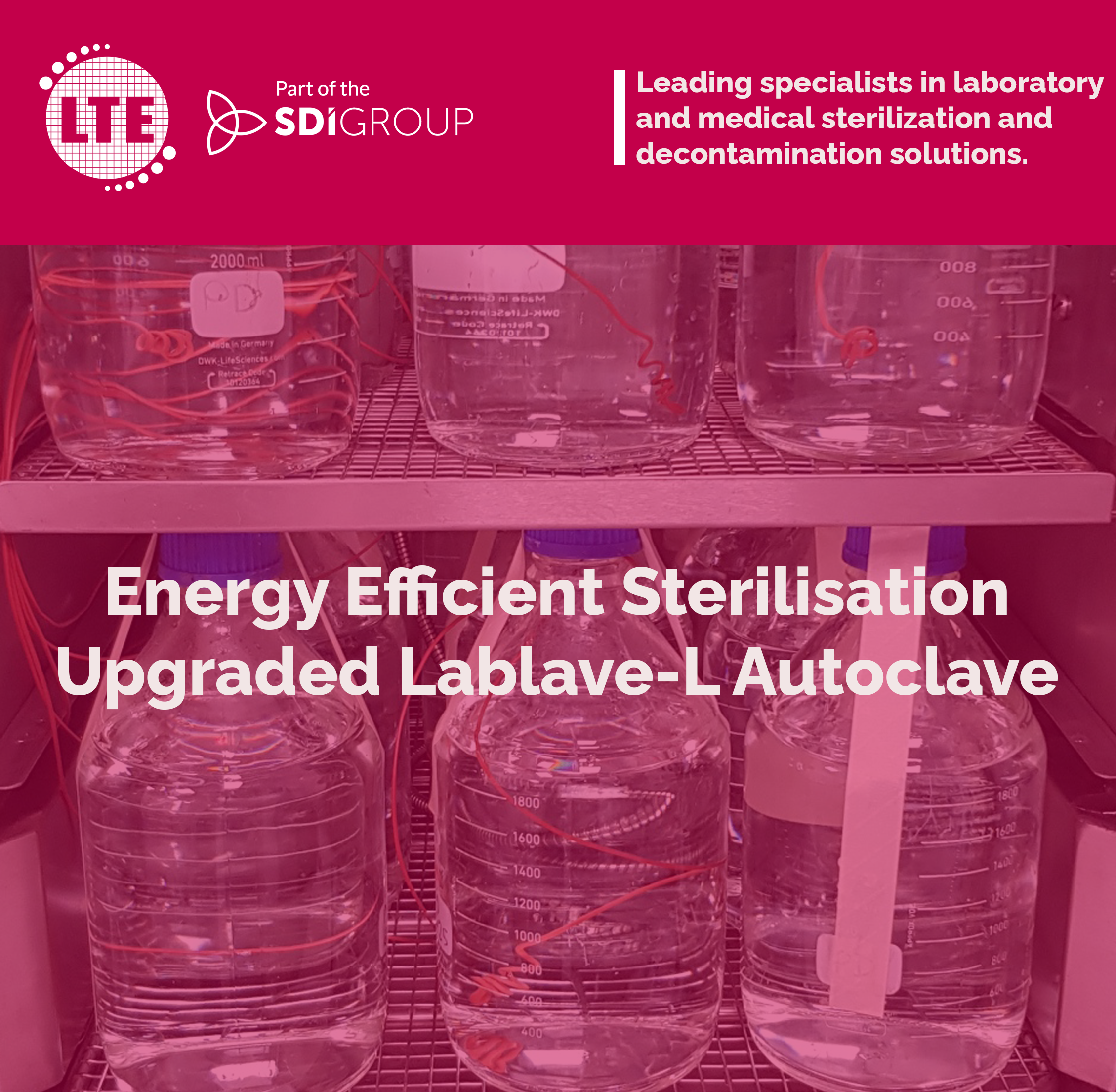
For modern laboratories, true efficiency therefore means using less energy while making better use of time and equipment. The latest version of LTE Scientific’s Labclave-L has been developed with these needs in mind, combining approximately ¾ kWh energy savings per cycle with cycle times that are around 15 minutes shorter, helping laboratories improve both energy efficiency and operational throughput.
Why Autoclave Energy Efficiency Matters:
Autoclaves are often required to operate multiple cycles throughout the day, particularly in busy laboratories where sterilised equipment and materials are needed regularly. With each cycle requiring energy to generate steam, heat the chamber and process the load, energy consumption can quickly accumulate through repeated use.
For facilities running hundreds or even thousands of cycles over the lifetime of an autoclave, even a relatively small reduction in energy consumption per cycle can result in meaningful savings over time. This makes energy efficiency an important consideration when selecting and operating laboratory sterilisation equipment.
The upgraded Labclave-L has been designed to address this issue, saving approximately ¾ kWh per cycle when compared with standard autoclave models. For autoclaves with high cycle volumes, reducing energy consumption on every cycle can contribute to lower overall energy use while supporting more efficient laboratory operations.
How Shorter Cycle Times Improve Efficiency:
As a result of strict deadlines and demanding workloads, laboratories need sterile equipment to be available whenever it is required. Delays in sterilisation can create bottlenecks, particularly in busy facilities where equipment needs to be processed and returned to use multiple times throughout the day.
Shorter autoclave cycle times can help improve turnaround by reducing the time equipment spends being processed. This means sterilised equipment can become available sooner, helping laboratories minimise waiting times and maintain a more consistent workflow.
The upgraded Labclave-L Autoclave achieves cycle times that are around 15 minutes shorter per cycle, regardless of load size. Over multiple cycles, these time savings can accumulate, allowing laboratories to make better use of their available equipment and working time. For facilities who typically process plenty on loads each day, the upgraded Labclave’s shorten cycles create the opportunity to process additional loads within the same working day.
Energy Efficiency and Productivity Working Together:
For modern laboratories, efficiency is about more than simply reducing energy consumption. It is also about making better use of time and equipment to keep workflows moving and meet ongoing demand.
The upgraded Labclave-L Autoclave brings these benefits together, saving approximately ¾ kWh per cycle while also reducing cycle times by around 15 minutes per cycle. This means laboratories can use less energy during sterilisation while getting equipment back into use sooner, helping to improve turnaround and make more effective use of existing equipment throughout the working day.
How the Upgraded Labclave-L Autoclave Supports Energy Efficient Sterilisation:]
As laboratory workloads continue to increase, efficient equipment can play an important role in helping facilities manage demand while making better use of their energy, time and resources. For autoclaves, efficiency is not only about reducing energy consumption, but also about how quickly equipment can be returned to use.
The upgraded Labclave-L Autoclave combines these two areas of efficiency, saving approximately ¾ kWh per cycle while reducing cycle times by around 15 minutes per cycle. By using less energy and improving turnaround, it provides laboratories with a practical way to make their sterilisation processes more efficient without compromising their essential requirements.
For busy laboratories, small improvements across every cycle can make a meaningful difference over time, helping them get more from their equipment while supporting more efficient day-to-day operations.